This article is protected. Printing and print-to-PDF are disabled.Read the original at https://arincortex.hashnode.dev
Arin/ tech blogs

Arin OS V2 — Fully Agentic

What changed in Version 2.0

10 slides · Arindrajit Chakraborty ·

A quick, end-to-end look at how V2 rebuilds the system around real agency — not just faster answers.
Cover: Arin OS turns fully agentic. And a lot more. Version 2.0, what changed.
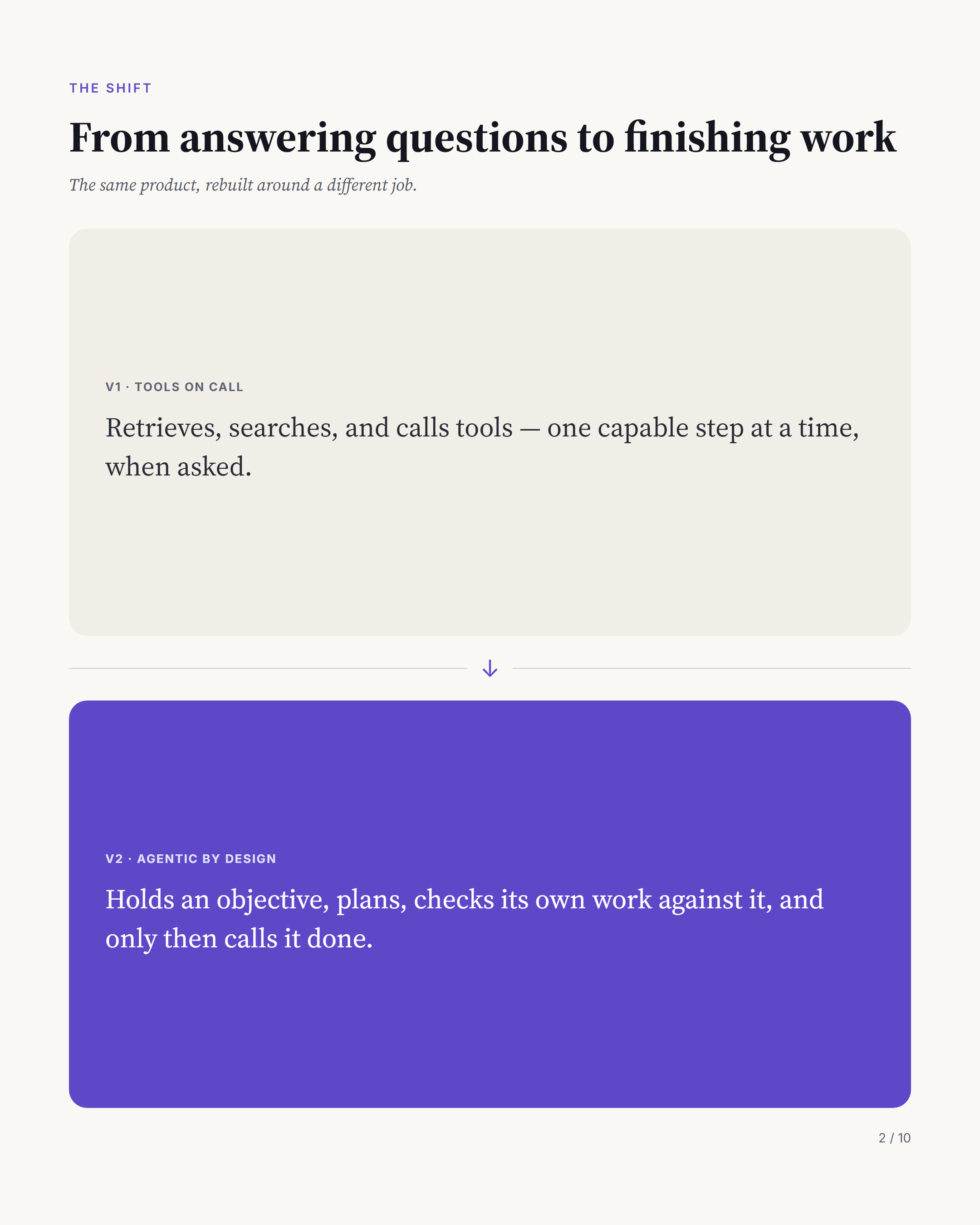
The shift: from answering questions to finishing work. V1 retrieved, searched and called tools one step at a time when asked. V2 holds an objective, plans, checks its own work, and only then calls it done.
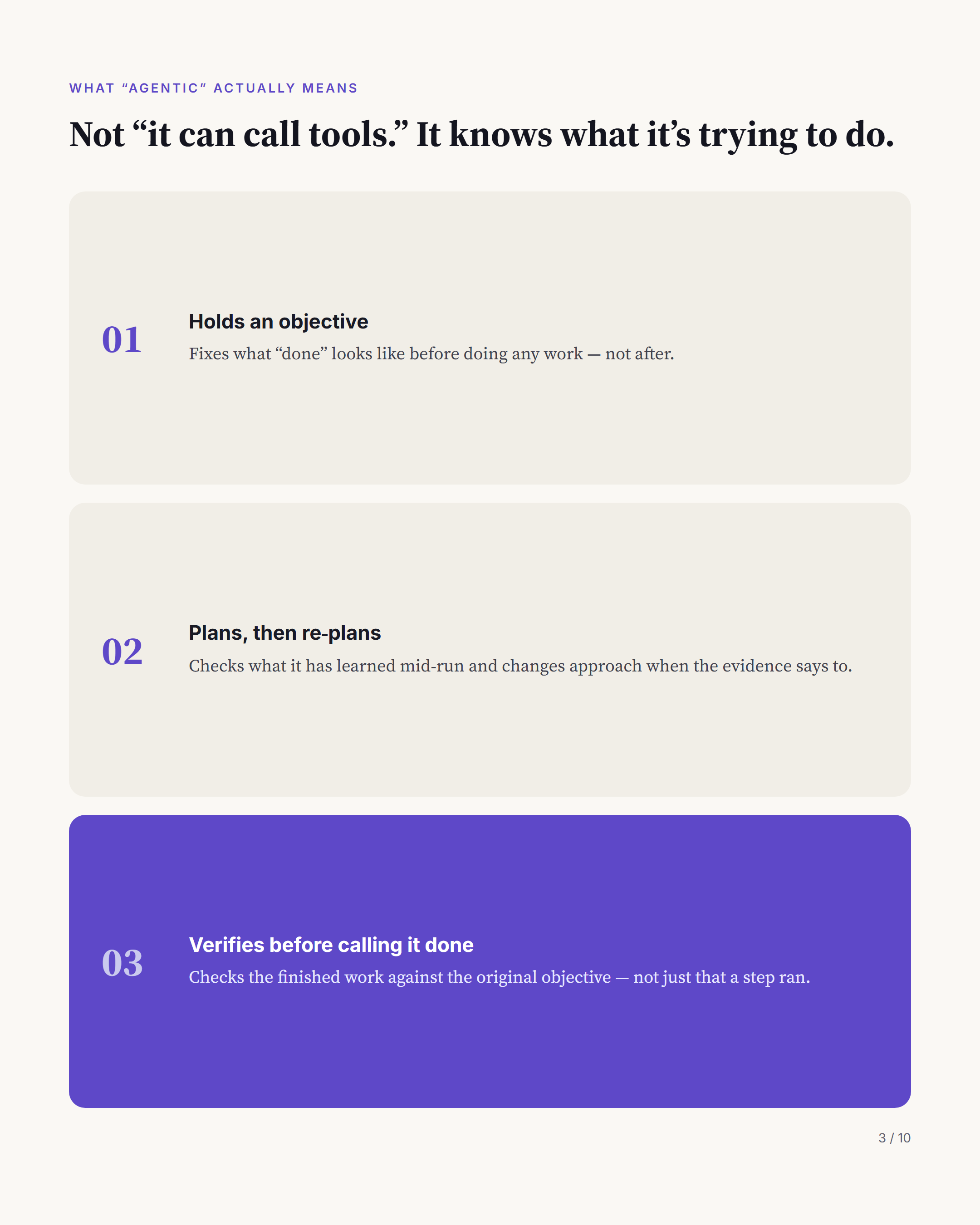
What agentic actually means, in three points: it holds an objective, it plans and re-plans, and it verifies the finished work against the original objective before calling it done.
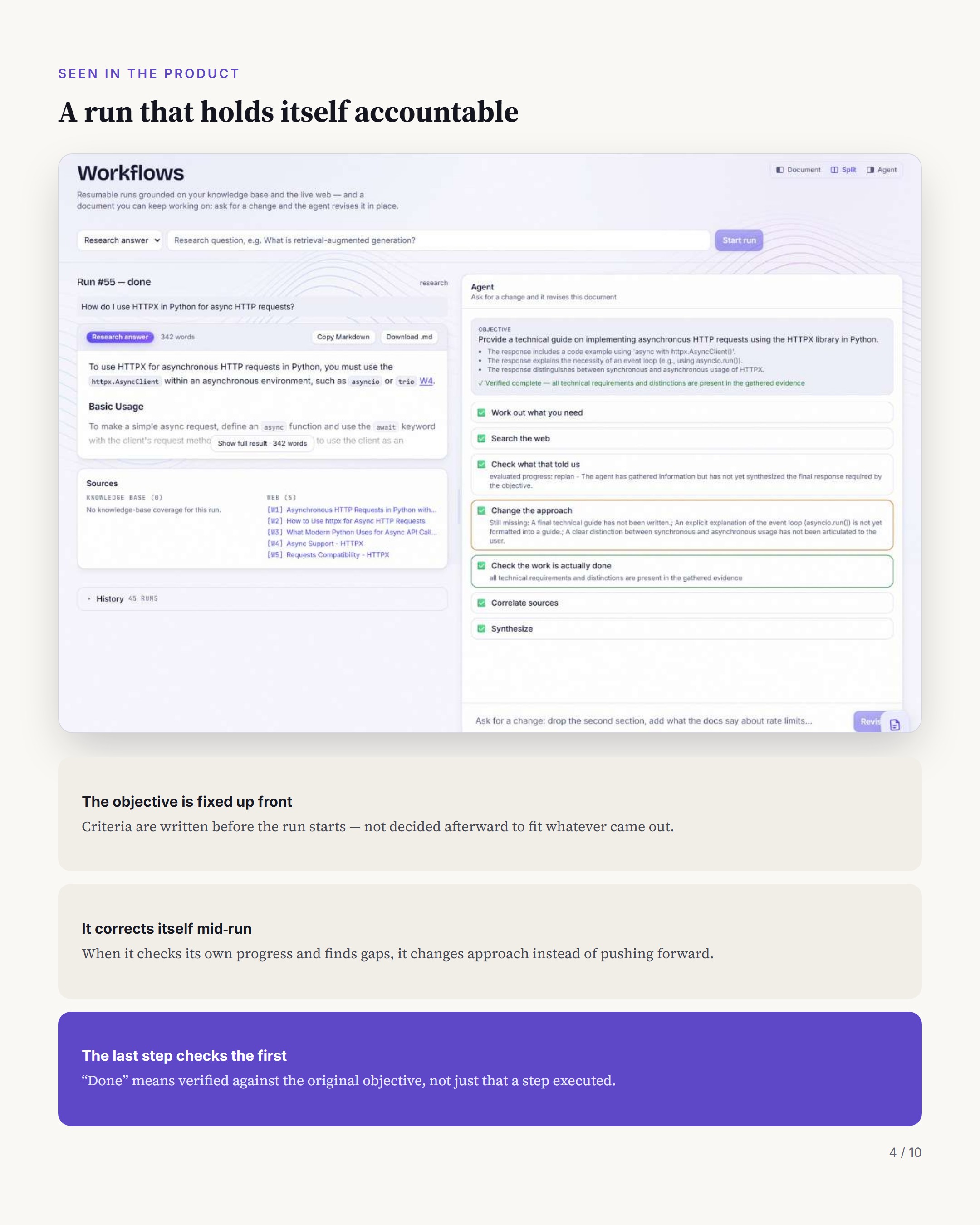
A screenshot of an agentic run in the product. The objective is fixed up front, the run corrects itself mid-way when it finds gaps, and the last step checks the result against the first.
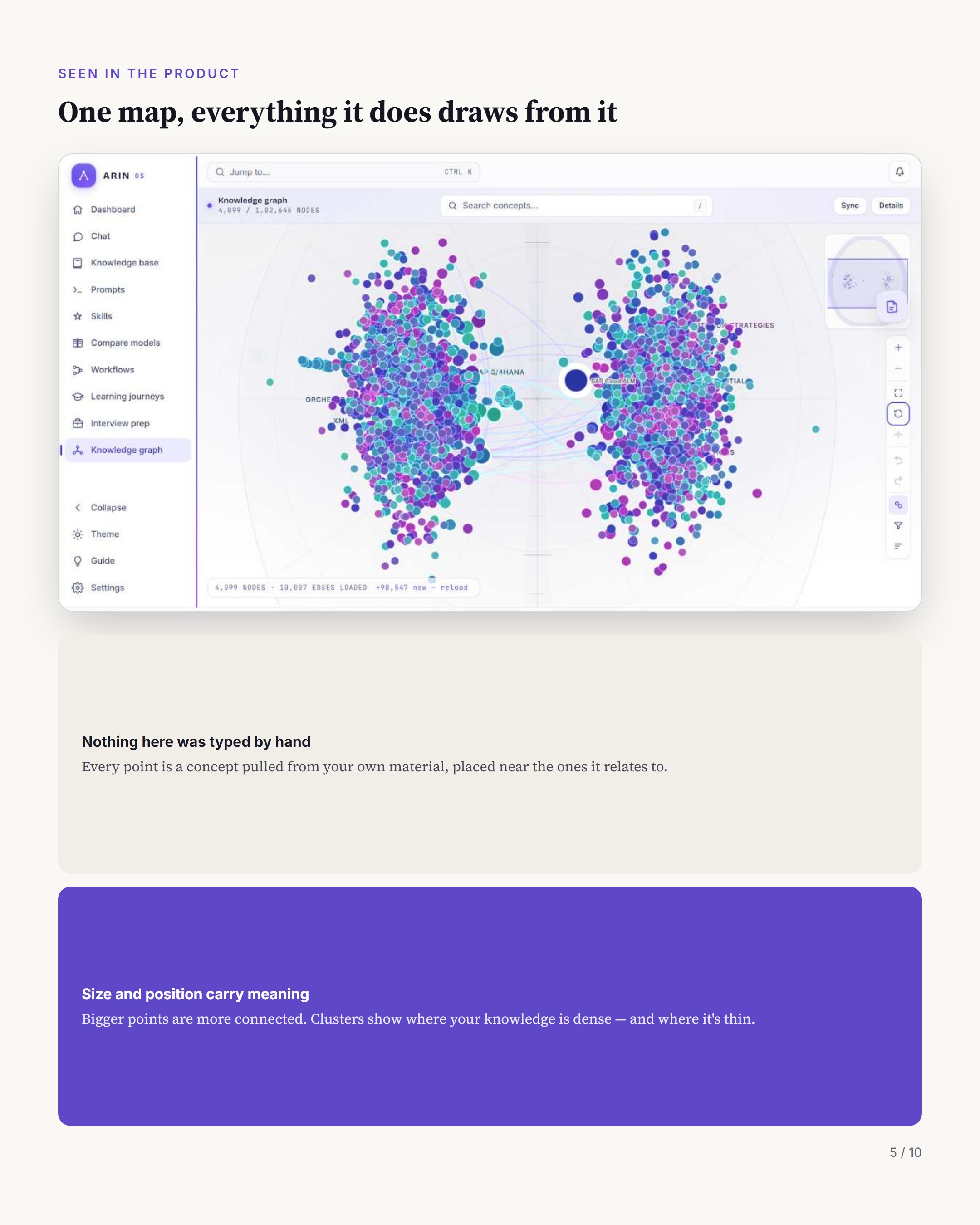
A screenshot of the knowledge graph. Every point is a concept pulled from your own material and placed near what it relates to; size and position show where knowledge is dense and where it is thin.
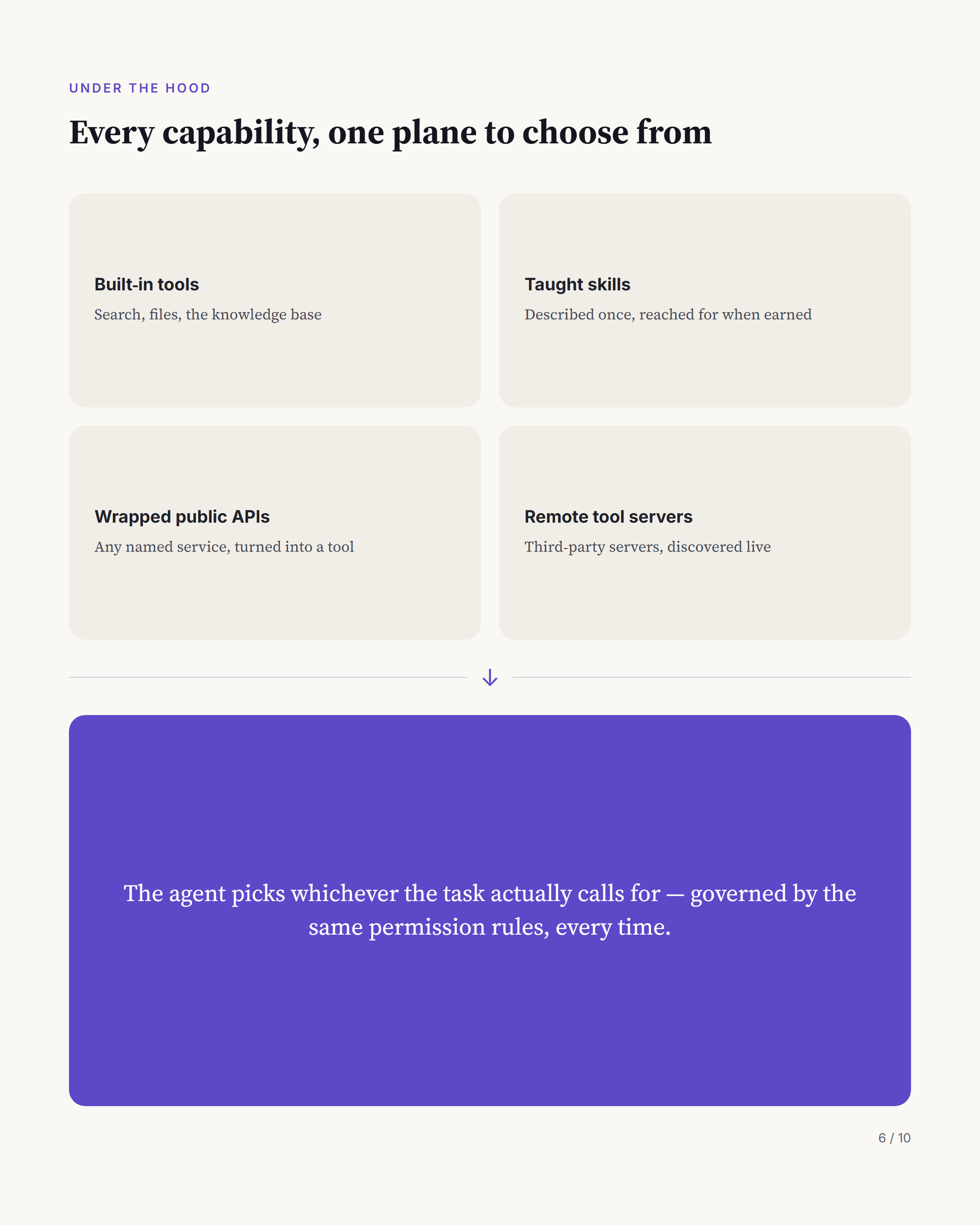
The capability plane: built-in tools, taught skills, wrapped public APIs and remote tool servers, all on one plane. The agent picks whichever the task calls for, under the same permission rules.
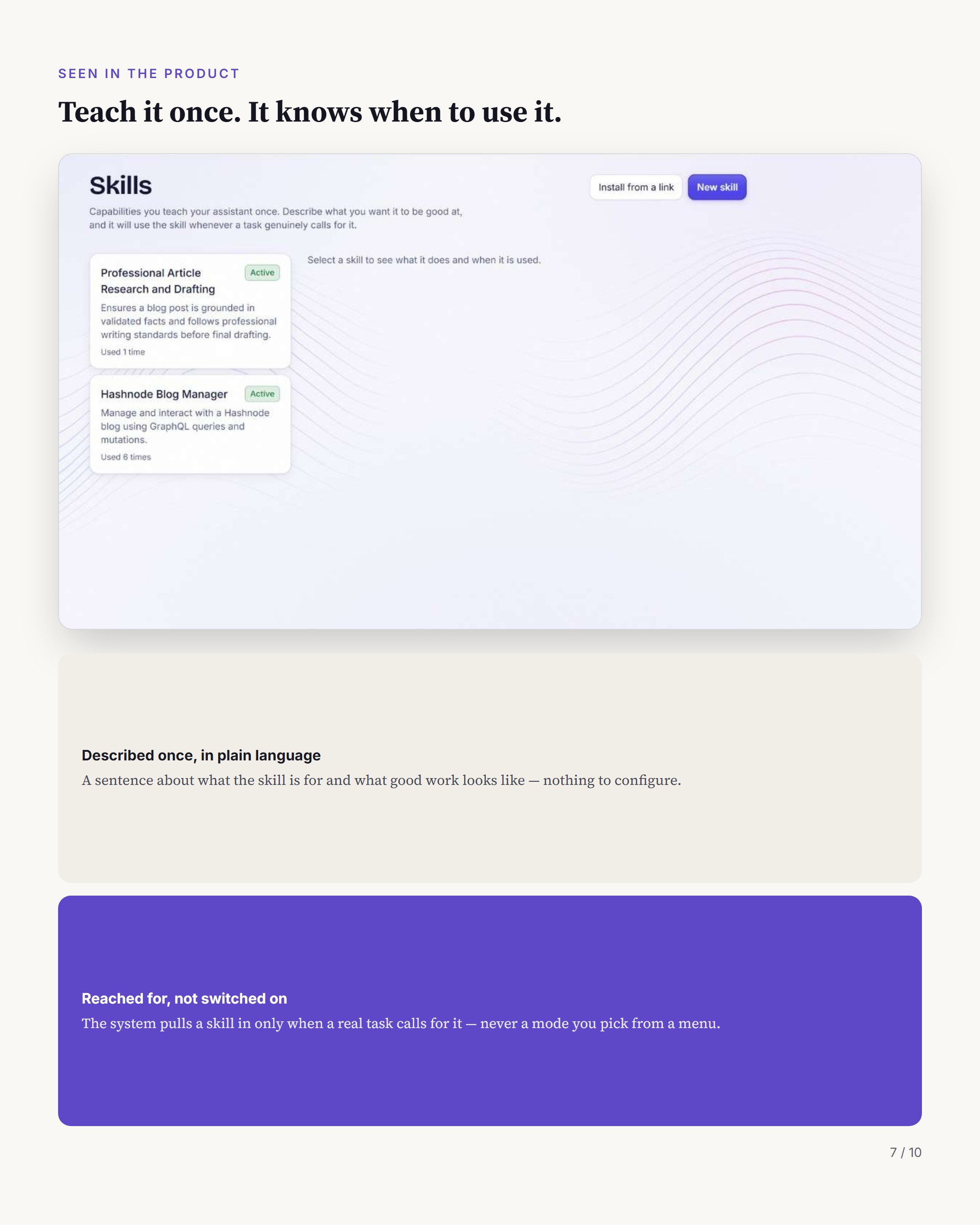
A screenshot of the skills panel. A skill is described once in plain language, with nothing to configure, and the system reaches for it only when a real task calls for it.
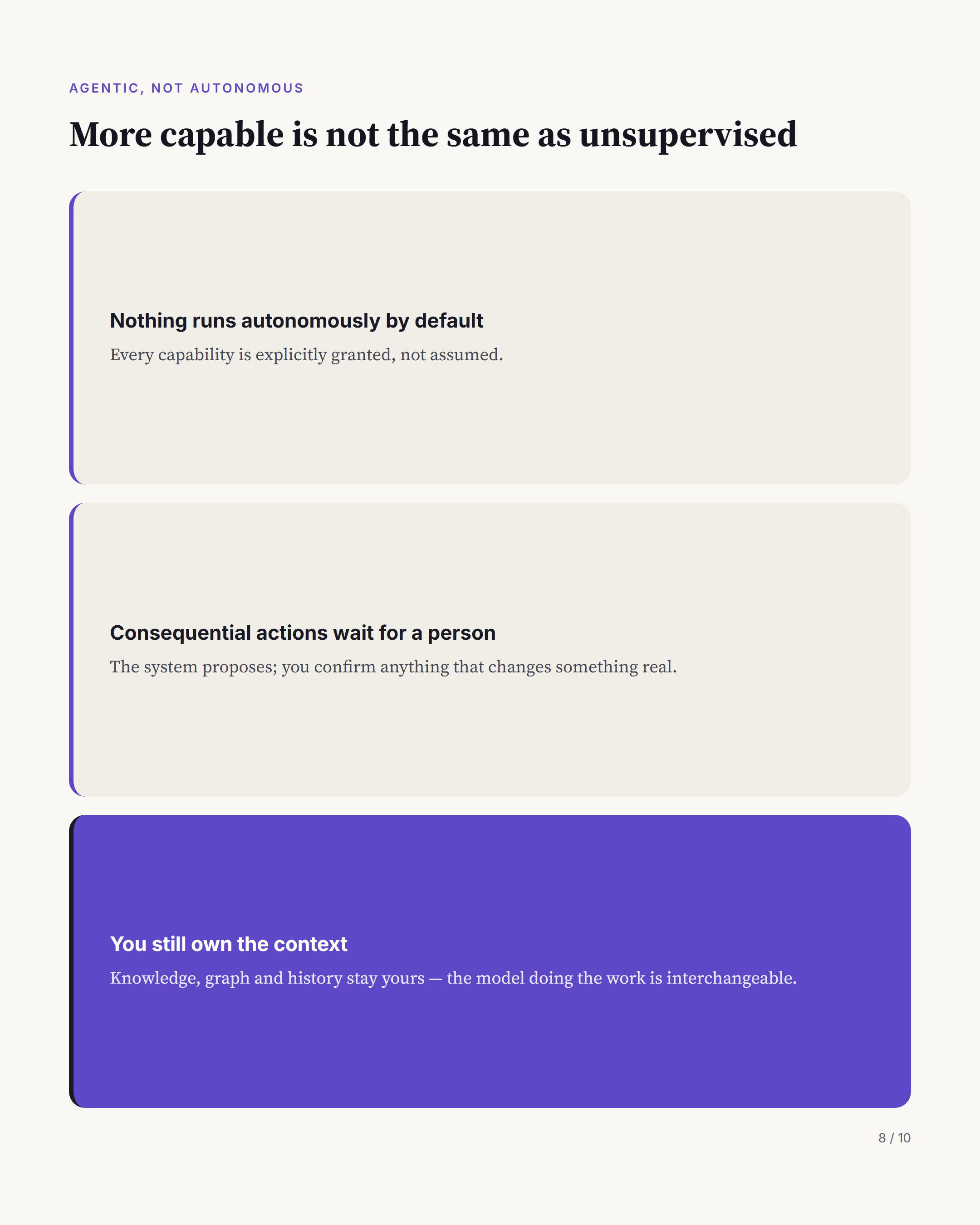
Guardrails: nothing runs autonomously by default, consequential actions wait for a person, and the knowledge, graph and history stay yours while the model doing the work is interchangeable.
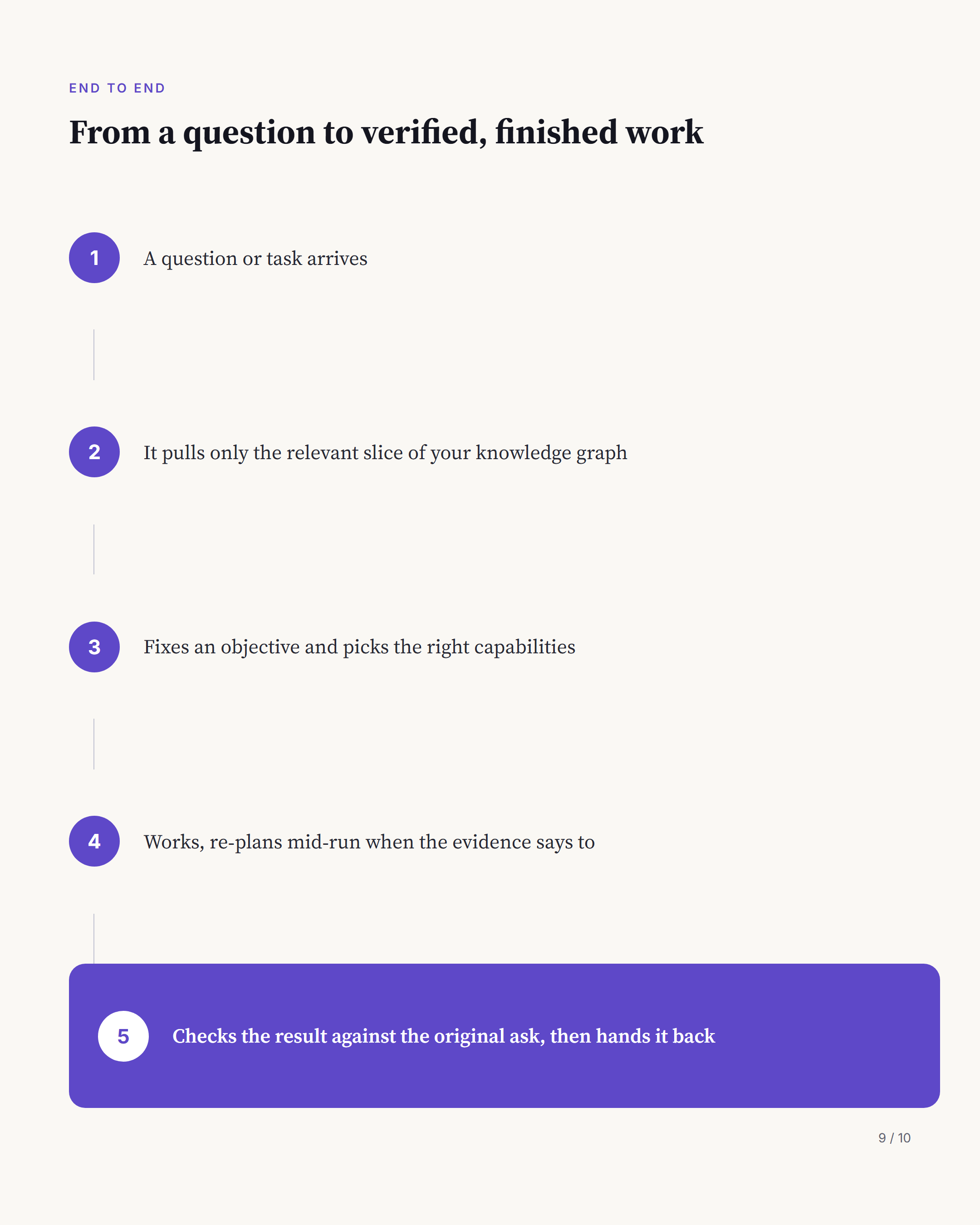
The end-to-end flow in five steps: a task arrives, the relevant slice of the knowledge graph is pulled, an objective is fixed and capabilities chosen, work proceeds with re-planning, and the result is checked against the original ask.
Closing: fully agentic, still yours to steer. Own the context. Rent the intelligence.
1 / 10

Version 2.0 — what changed

Use ← → to move between slides

V1 could call tools — search, retrieve, answer. V2 does something different: it holds an objective, plans against it, checks its own progress mid-run, and only calls a task “done” once the finished work actually matches what was asked. That is the real definition of agentic — not “it can use tools,” but “it knows what it’s trying to do.”

Everything it does still draws from one place: your own knowledge, mapped as a graph rather than a folder of files. Skills are taught once, in plain language, and the system reaches for them only when a task genuinely calls for it. Tools, taught skills, wrapped APIs and remote servers all sit on one capability plane.

None of this means unsupervised. Nothing runs autonomously by default, consequential actions still wait for a person, and the context — your knowledge, your history — stays yours no matter which model is doing the work underneath.

Own the context. Rent the intelligence.