Chapter 10 of 14 · 1 min · 71% through
A course that remembers where you left off
Learning inside the environment is built out of the same material everything else draws on, rather than a generic curriculum bolted on beside it. A course is assembled from the knowledge base and the graph relevant to the subject, broken into sessions, and tracked session by session — so picking a course back up after a week away resumes where the material actually left off, not from a generic start screen.
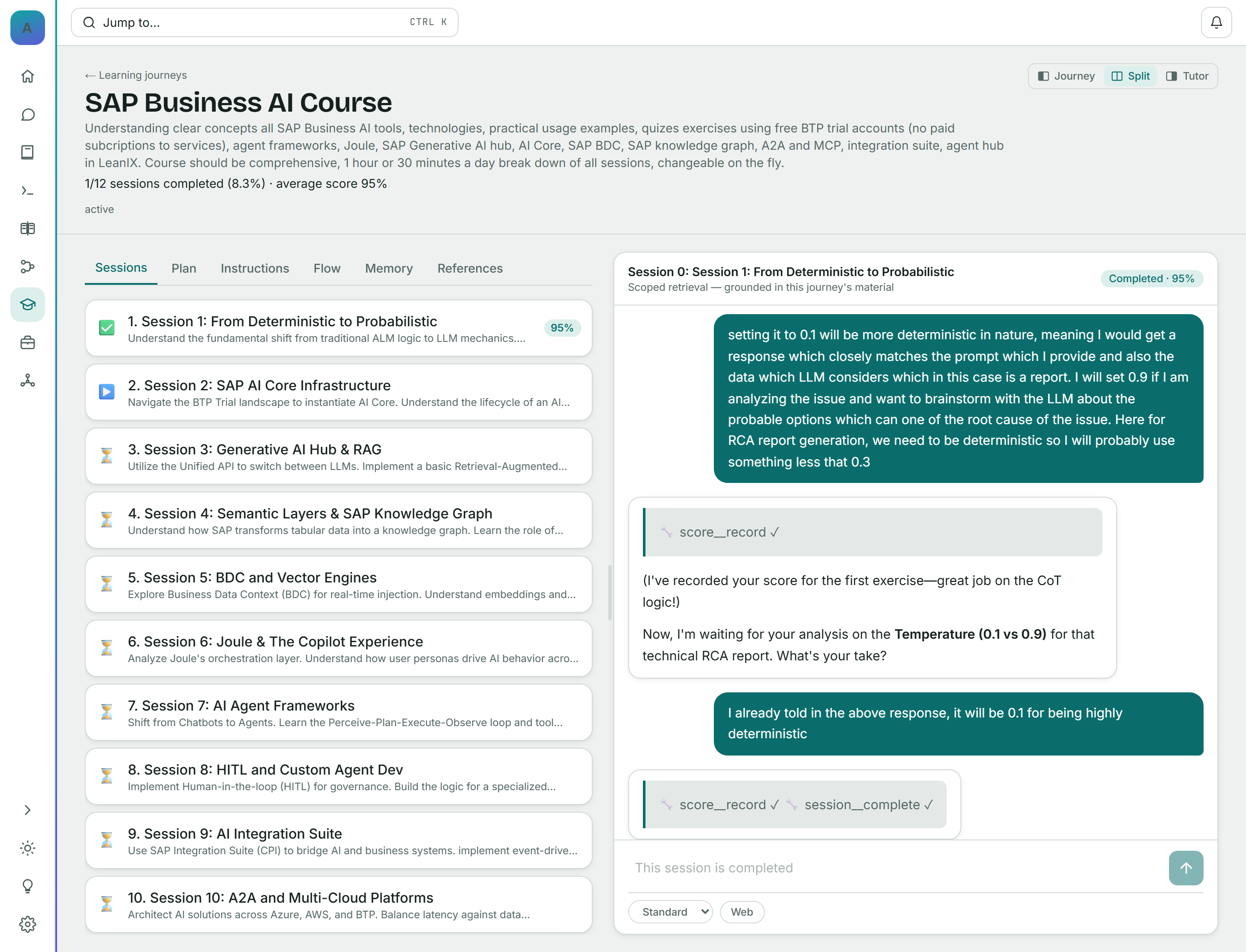
Questions asked inside a session are answered the same grounded way a question in the conversation surface would be — against the material behind that specific course, with sources attached — so a learner is never quietly handed a plausible-sounding explanation that happens not to match the source they are actually trying to master.
Readiness, made visible
Preparation is easy to feel good about and hard to measure. Both surfaces answer that by turning study into a small set of honest numbers — not to gamify the work, but so a learner can tell the difference between having reviewed something and actually being ready for it.
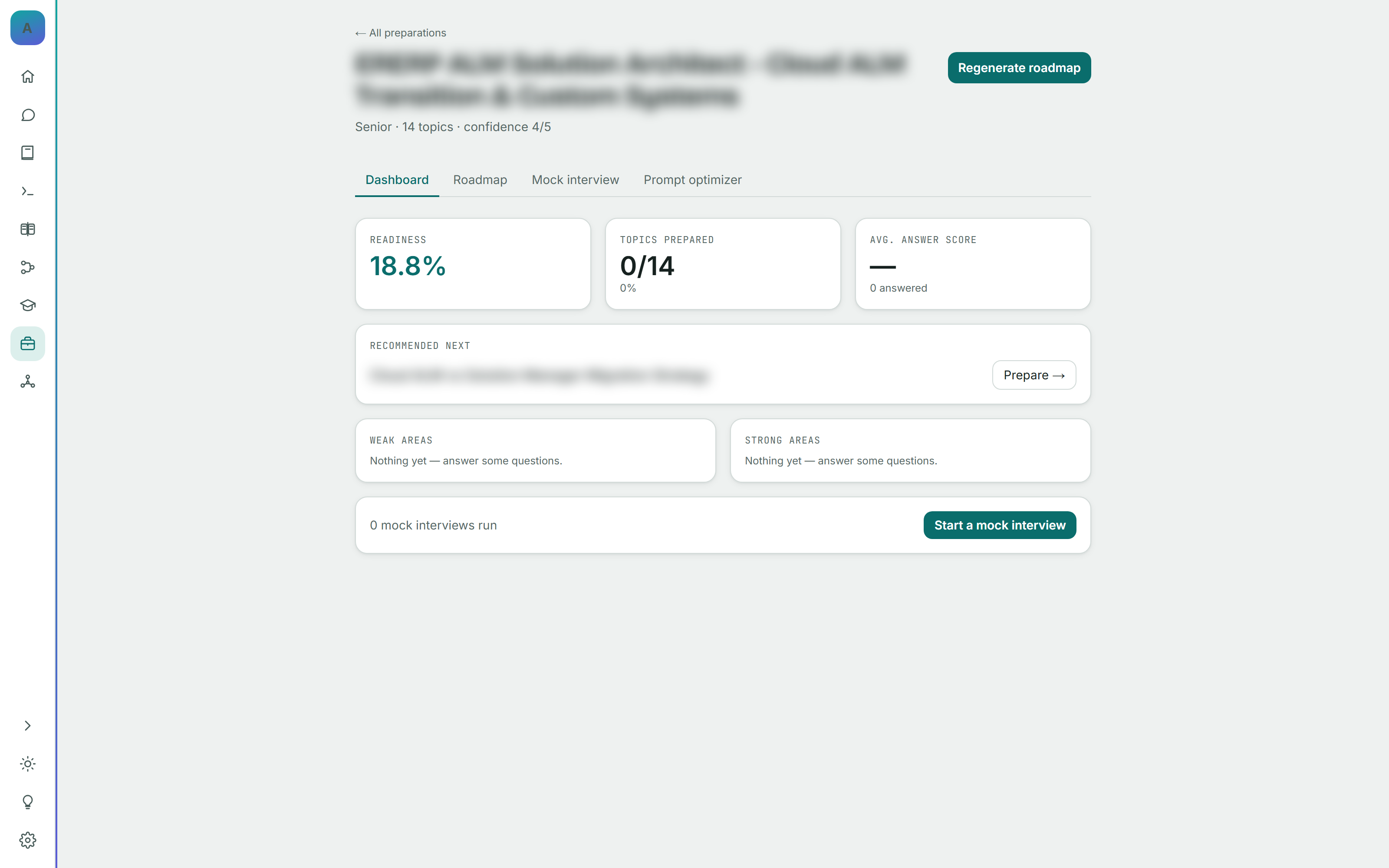
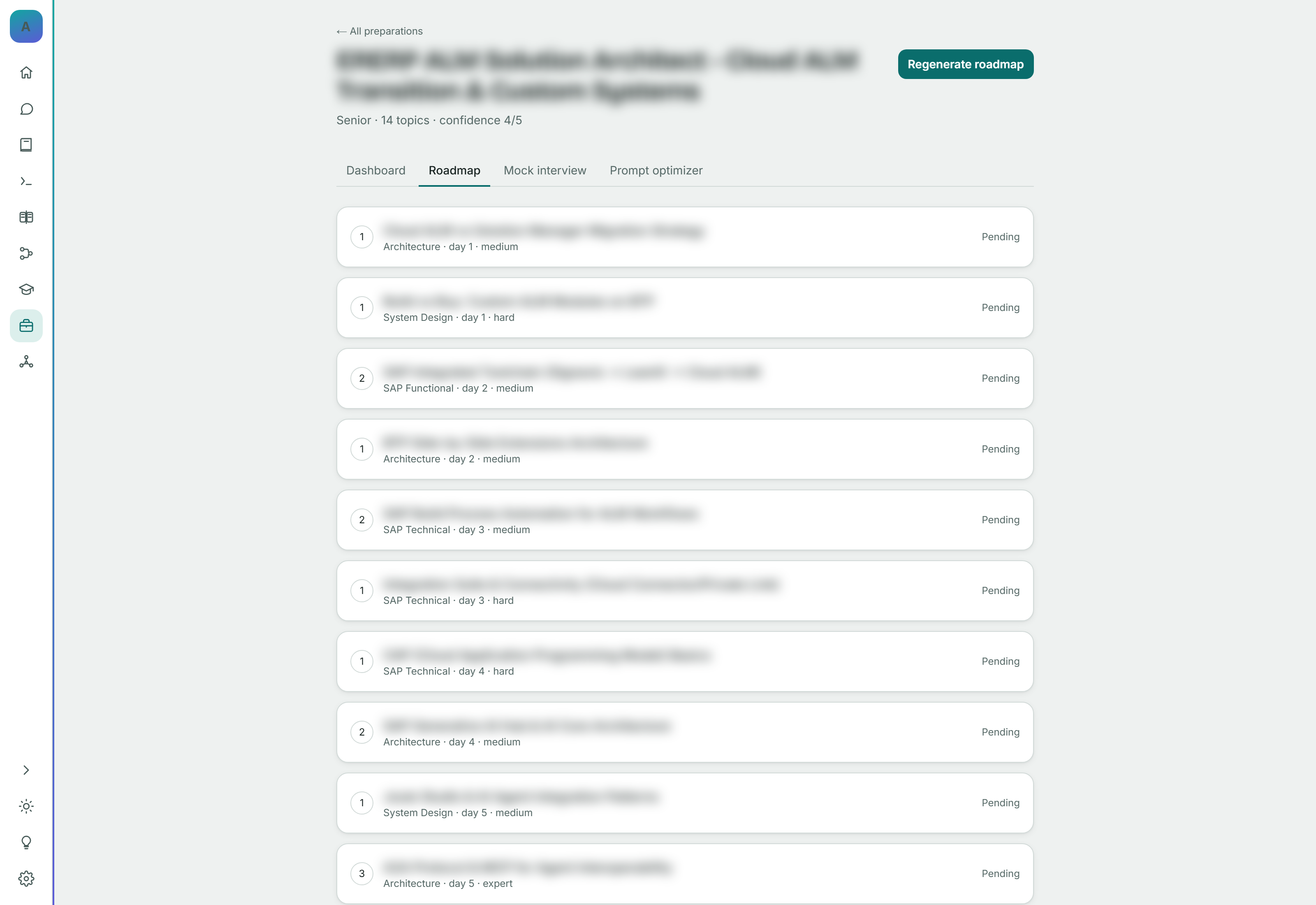
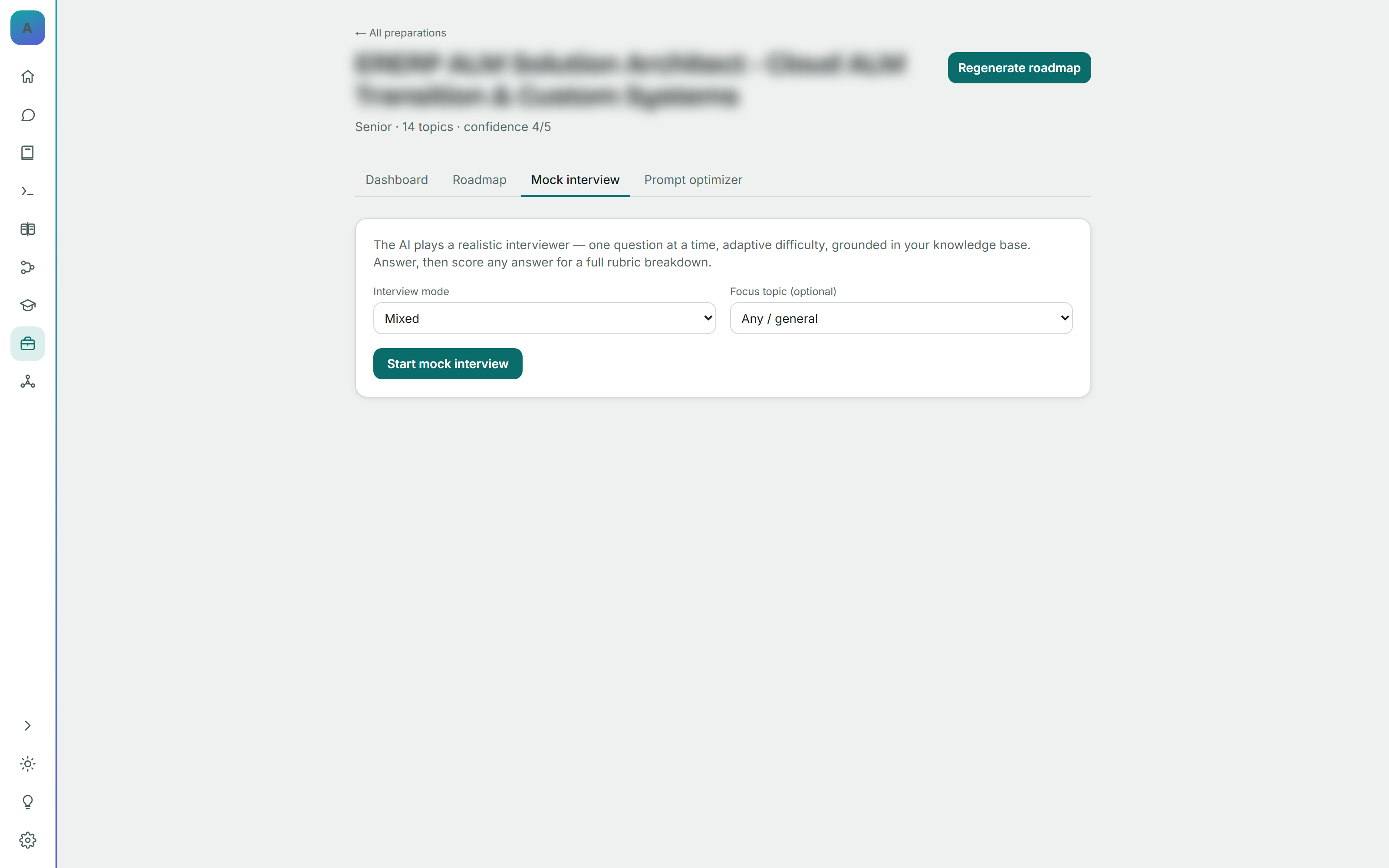
The roadmap orders what is left to cover; the mock session tests it out loud. Neither replaces the other — a roadmap without practice is just a reading list, and practice without a roadmap is just anxiety with no shape to it.