Chapter 08 of 14 · 1 min · 57% through
Work that carries an objective
A reply answers a question. A workflow finishes a job, and a job has steps, an order, and a way of knowing whether it is actually done. The workflow engine is where the environment stops behaving like a chat window and starts behaving like something you would hand a real task to and walk away from for a while.
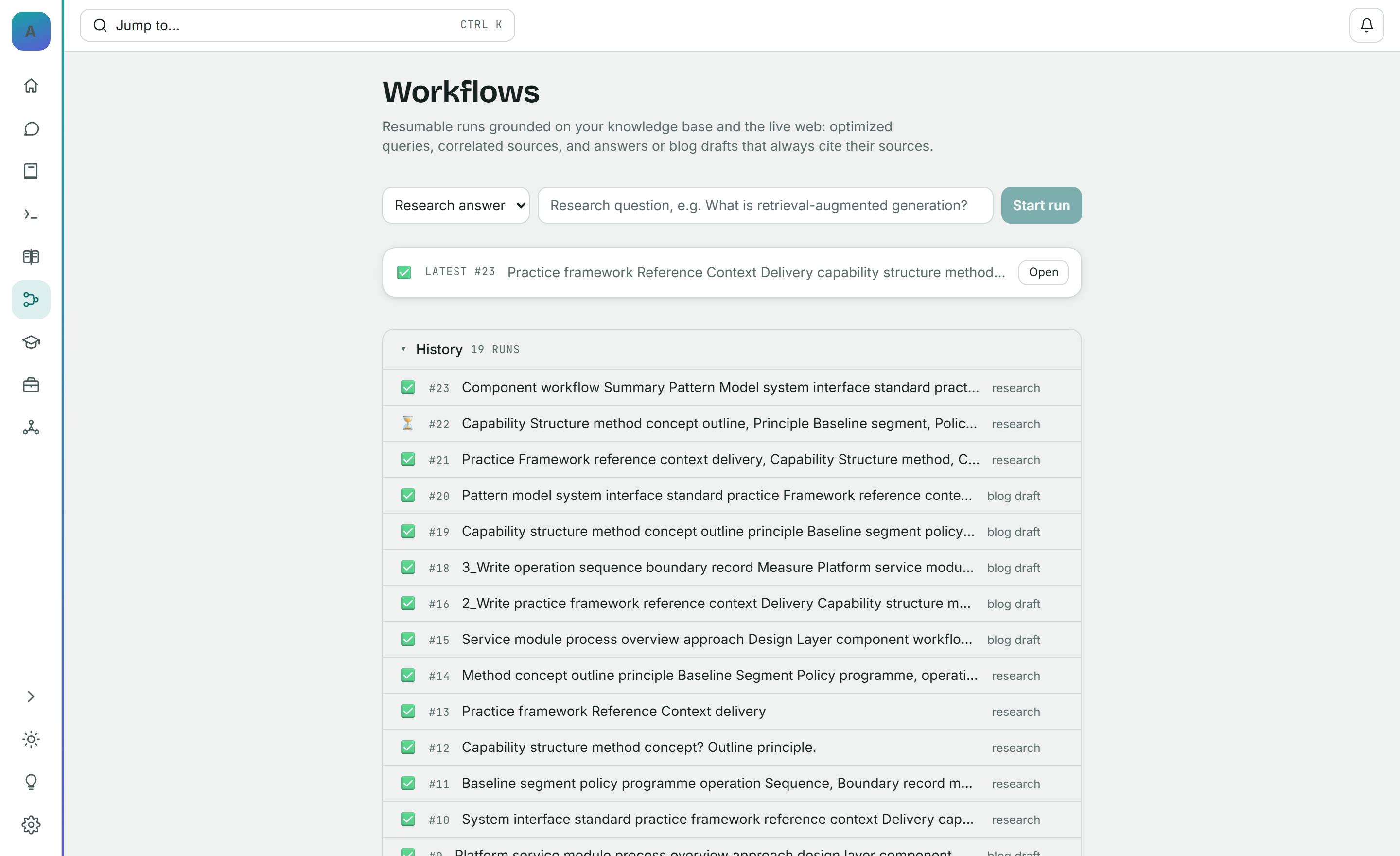
A workflow starts from a template — comparing two options against a set of criteria, preparing for a negotiation, drafting a piece of writing against a house style, researching a topic before a meeting — and each template names the objective up front, so that both the person and the system have the same idea of what “finished” is supposed to look like before the first step runs.
This is a small distinction in words and a large one in practice. A prompt can be answered well and still miss the point of the task behind it. A workflow with a stated objective can be checked against that objective when it finishes — which is the difference between work you have to review line by line and work you can actually trust to have been attempted honestly.