Chapter 04 of 14 · 1 min · 29% through
A library becomes a map
A library tells you what you have. It does not tell you how any of it relates to anything else — that a note from three years ago contradicts a report from last month, or that two unrelated projects turn out to share a vendor, a method or a mistake. The knowledge graph exists to answer the second kind of question, which a folder of files cannot answer no matter how well it is organised.
It works by pulling out the concepts a body of material actually talks about — people, projects, terms, decisions — and drawing a line between two concepts whenever the material itself draws that line. The result, visible on screen as a field of connected dots, is not a decoration. It is a genuinely different way of asking a library a question: not “which document mentions this,” but “what does this connect to, and how far does that go.”
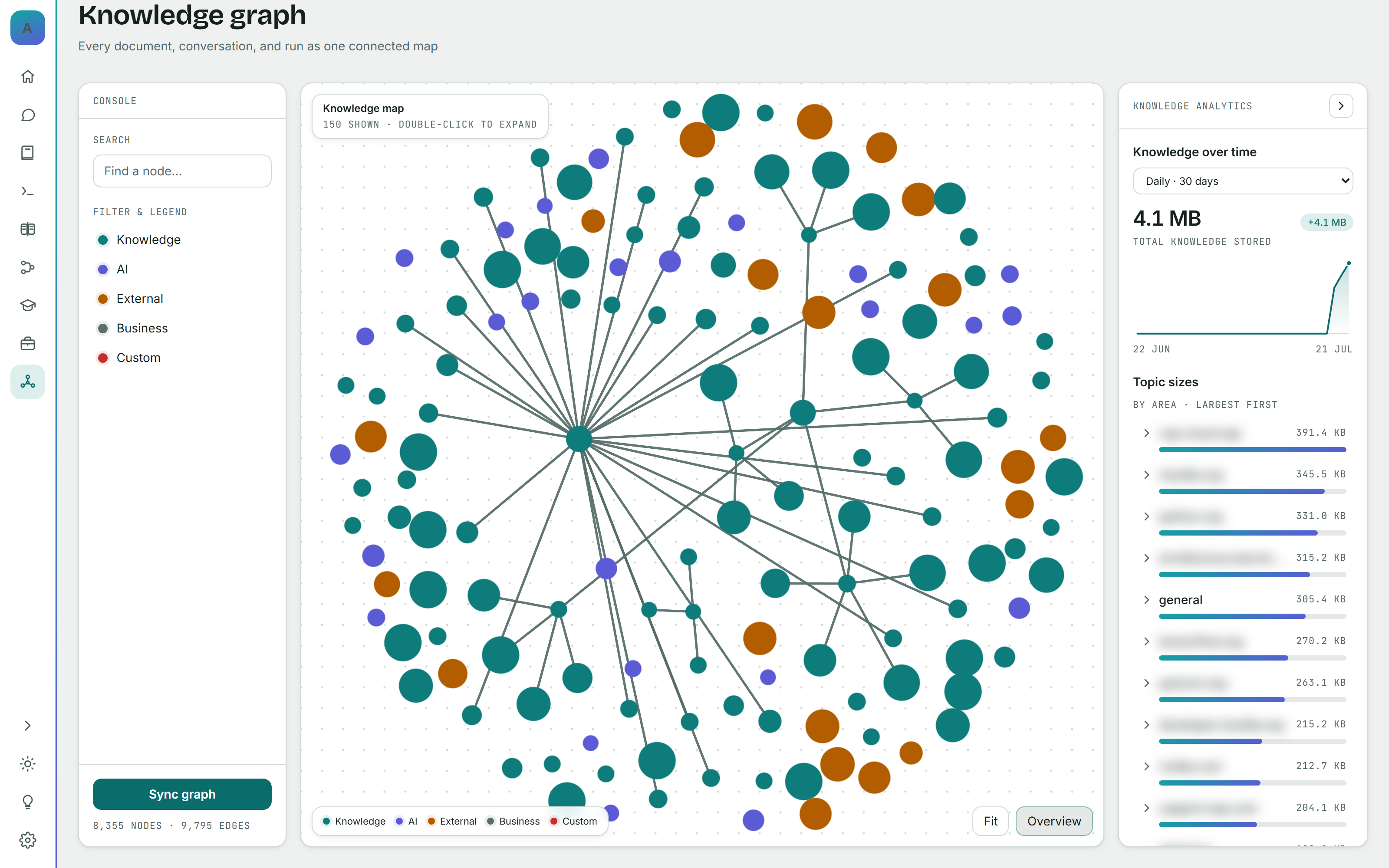
Building this map is not free, and the tool does not pretend otherwise. Reading a document is cheap. Working out how its ideas relate to everything else already in the base is a separate, heavier pass, run deliberately rather than constantly — a distinction that matters more once Part IV gets to workflows, where the graph gets asked to do real work rather than sit there looking connected.