Chapter 10 of 20 · 3 min · 50% through
Series, categories and topics
Three ways in, doing three different jobs
There are three ways to navigate the writing sideways rather than by date, and they are deliberately not the same mechanism with three names.
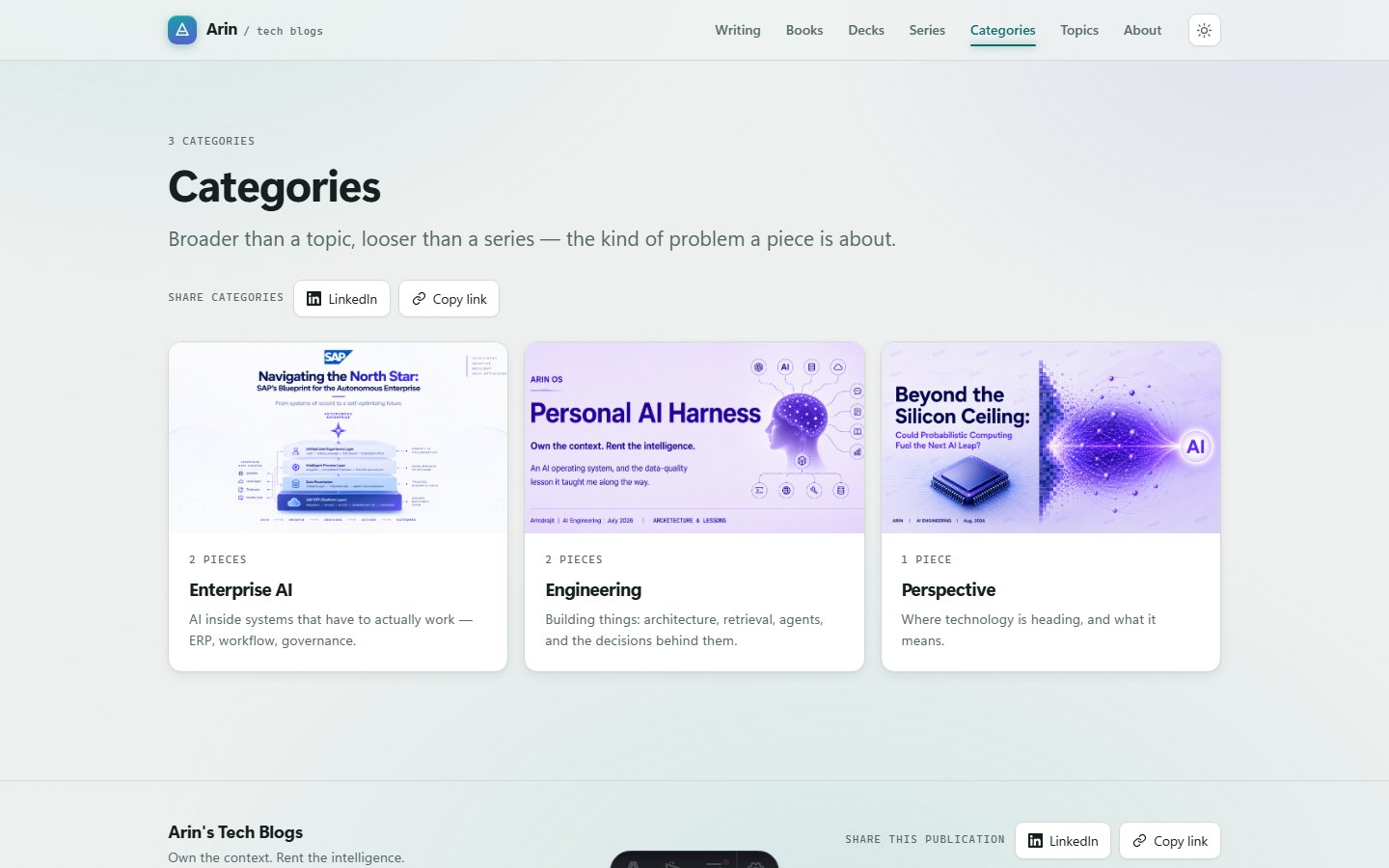
Categories are the shelf. A small fixed set, defined in the site settings, each with a name and a description. An article has exactly one. They exist to answer “what kind of thing is this” — and they are fixed precisely so that answer stays meaningful.
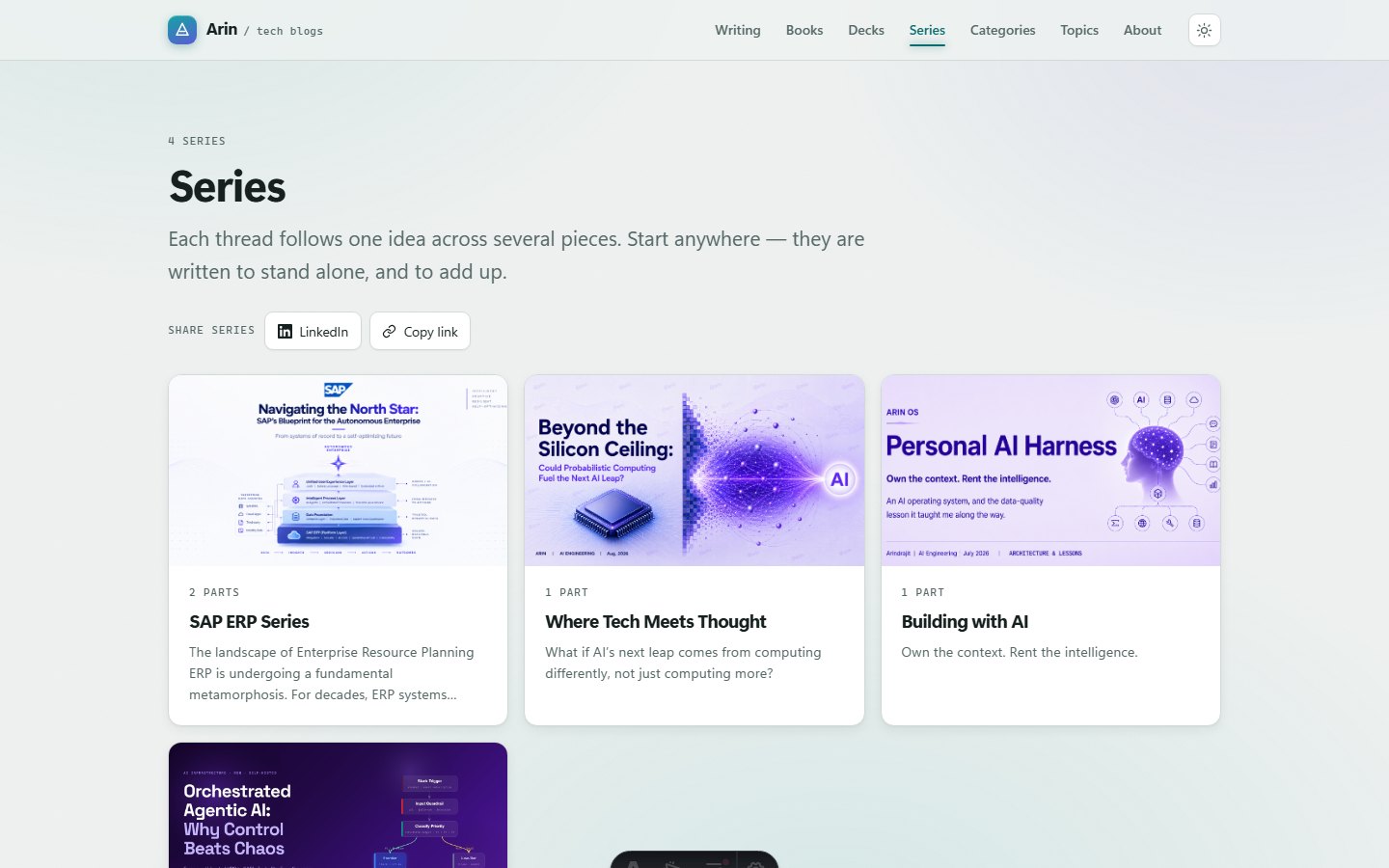
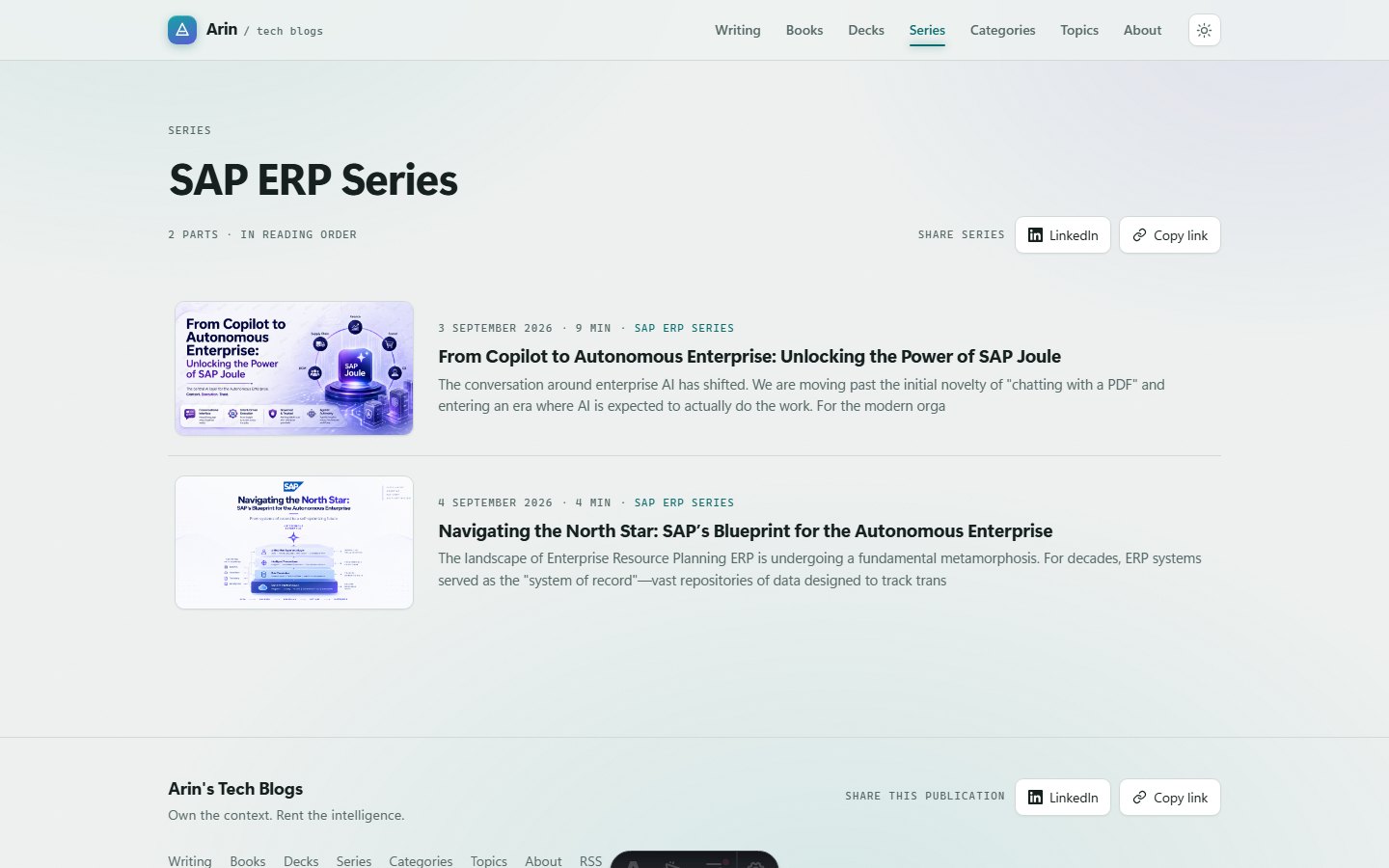
Series are the sequence. An article belongs to a series when it is part of an ongoing argument that runs across several pieces. Series are free text, created as they are needed, with autocomplete in the editor from the ones already in use — loose by design, because a series appears when the writing produces one, not when a taxonomy is planned.
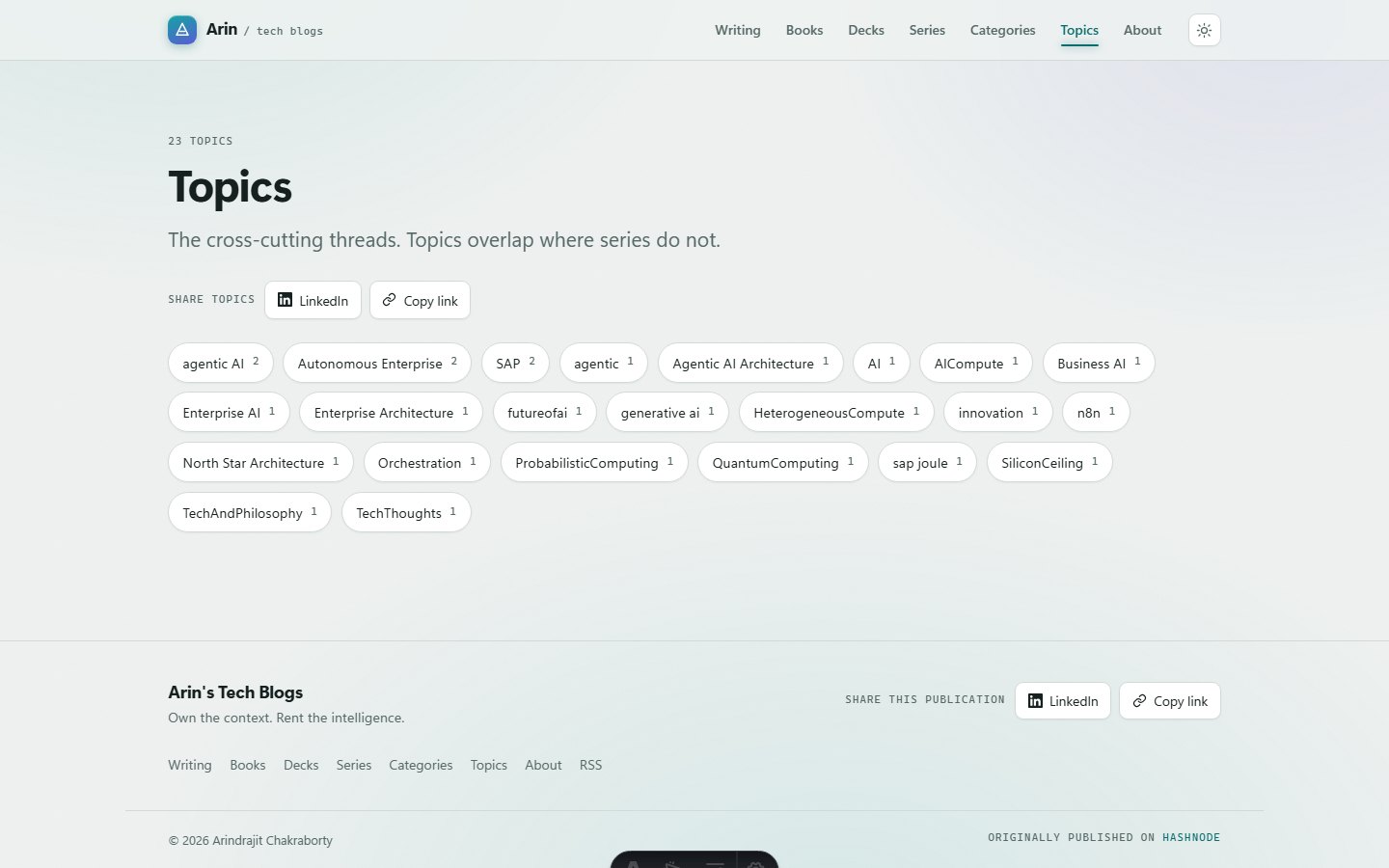
Topics are the index. Free-form tags, several per article, no structure at all. They are the fine-grained layer where “retrieval” and “governance” and “SAP” live without either of them having to become a category.
Why fixed and loose, together
The temptation with taxonomy is to make everything the same and let it grow freely. That is how a personal site ends up with forty categories, six of them near-synonyms, and no navigation worth having.
The split solves it by making each layer’s cost of creation match its job. Creating a category means editing the site settings — deliberate, rare, and you see the whole list while you do it. Creating a series means typing a name that is not already in the autocomplete. Creating a topic costs nothing.
The result is a small navigable set at the top, a medium set in the middle, and an unconstrained long tail underneath. Each layer stays useful because it is priced correctly.
The pages
Each layer gets an index page listing what exists, and a page per entry listing what is in it.
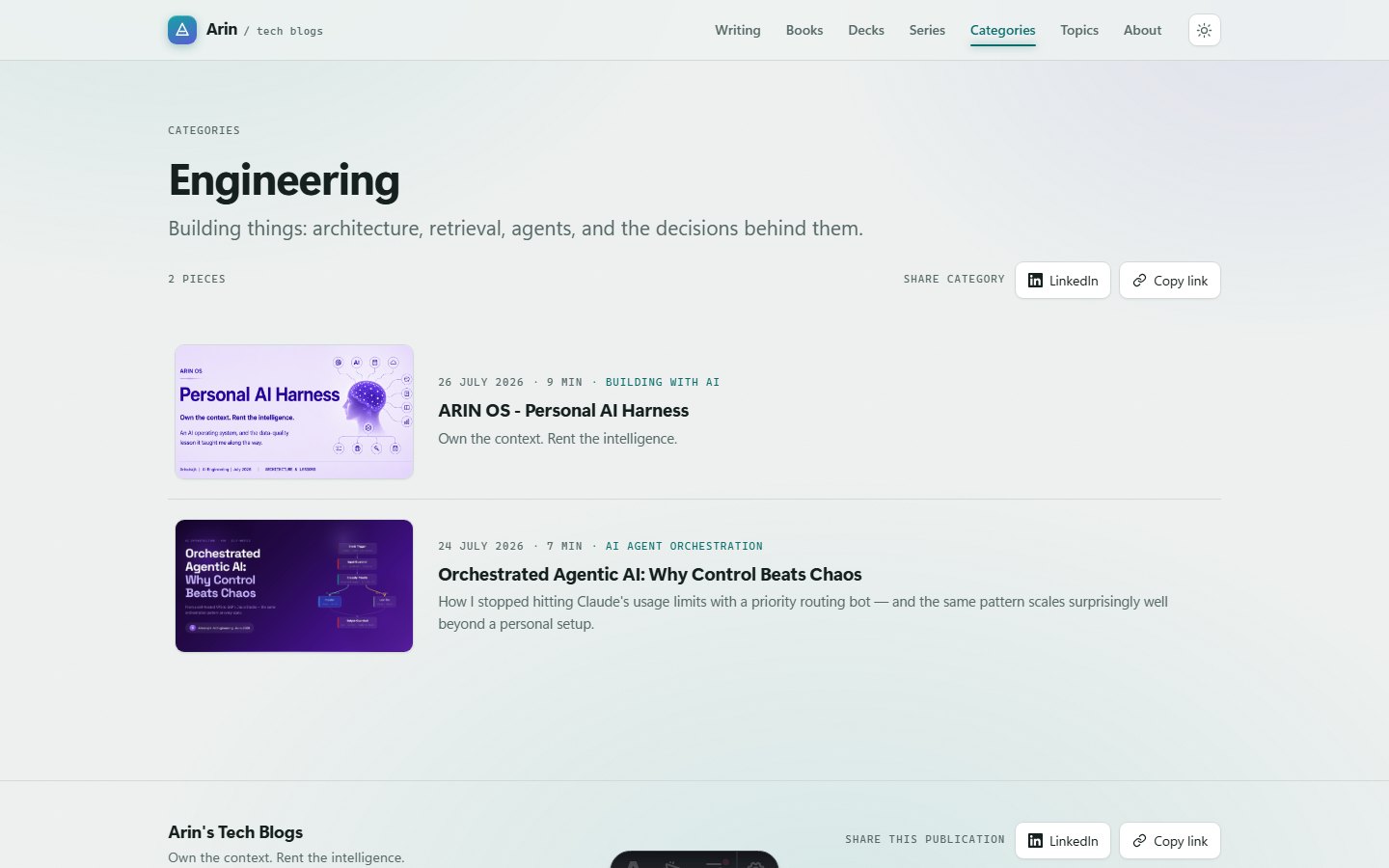
All of them derive from the articles themselves at render time. There is no separate list of series to maintain, no orphaned category page for a category nothing is in any more. Publish an article in a new series and the series page exists; unpublish the last one and it stops existing.
That includes discovery: every category, series and topic page that has content in it appears in the sitemap with a date derived from its newest member, so a category that has just gained an article is described as recently updated because it is.
The one that is not a taxonomy
Worth a brief mention because it sits in the same row of navigation: the About page is a single page rendered from the site settings — the author block, the bio, and the publication’s own description.
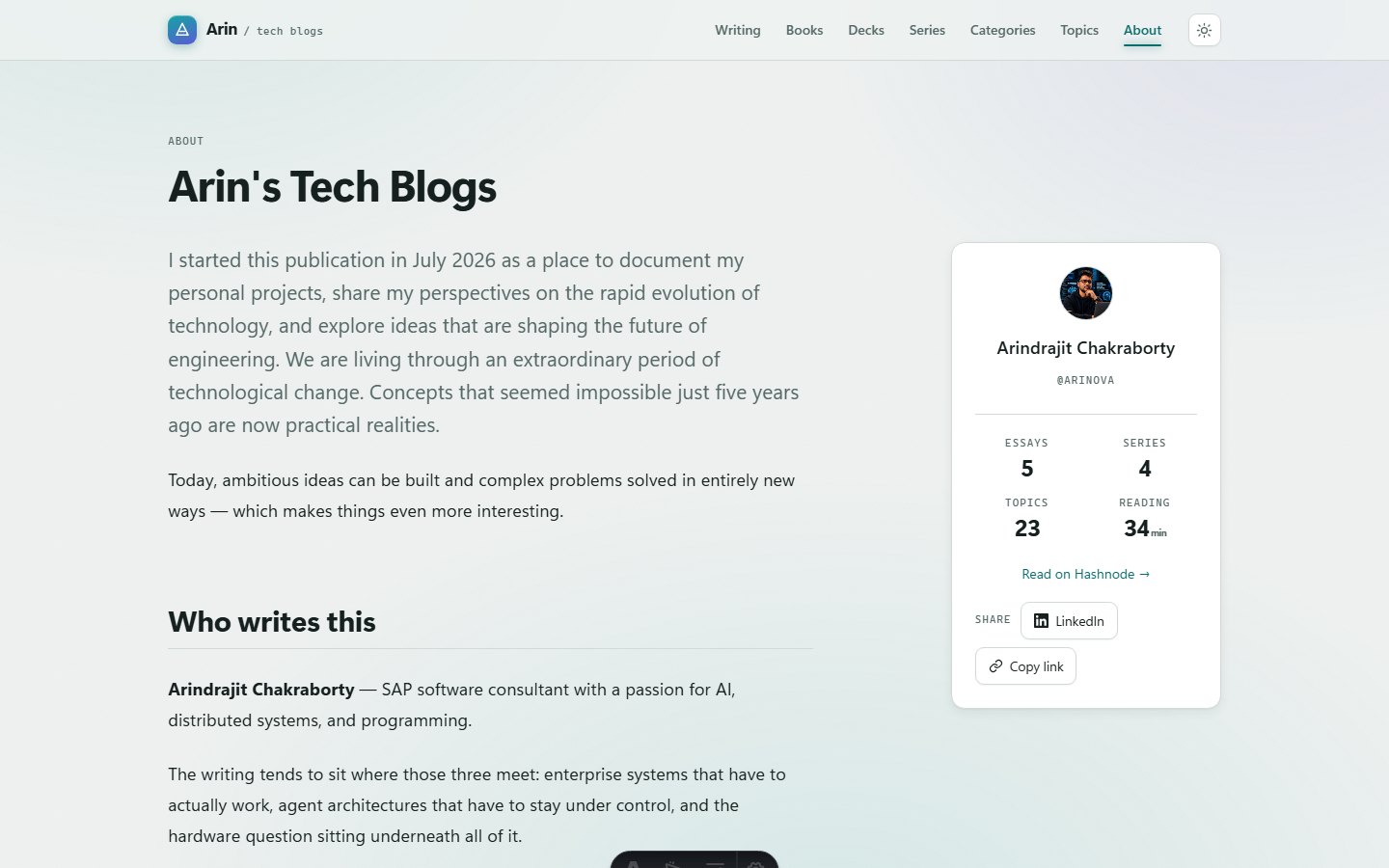
It is not an article, and keeping it out of the articles collection means it never appears in the writing list, the feed, or a category — which is what you want from a page that describes the site rather than being part of it.